AI Image Classification Tool
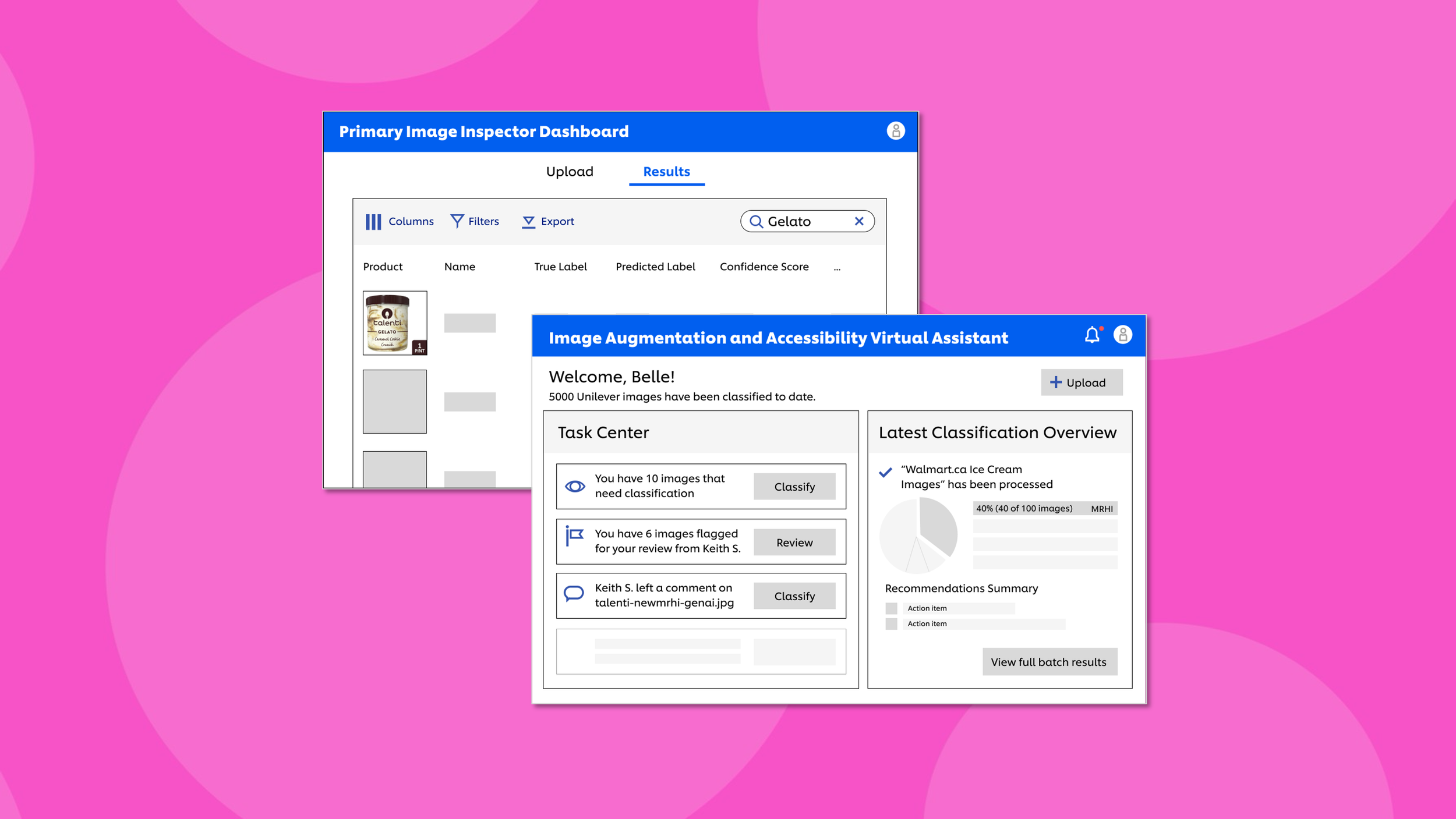
A web application that automatically classifies product images with computer vision and presents the results.
The goal of this project was to improve the old workflow of manually classifying 60k+ Unilever product images in spreadsheets for the digital commerce team.
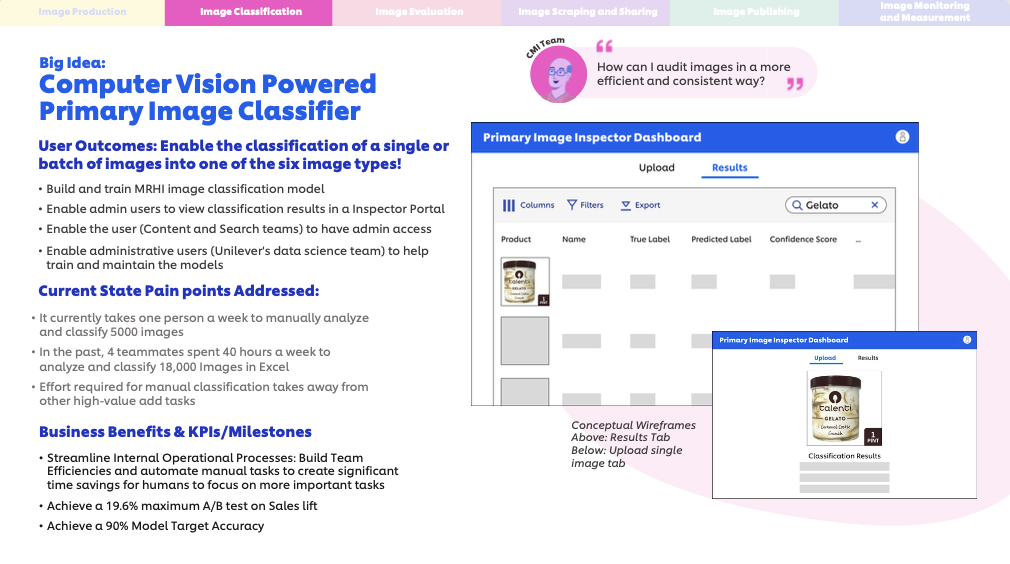
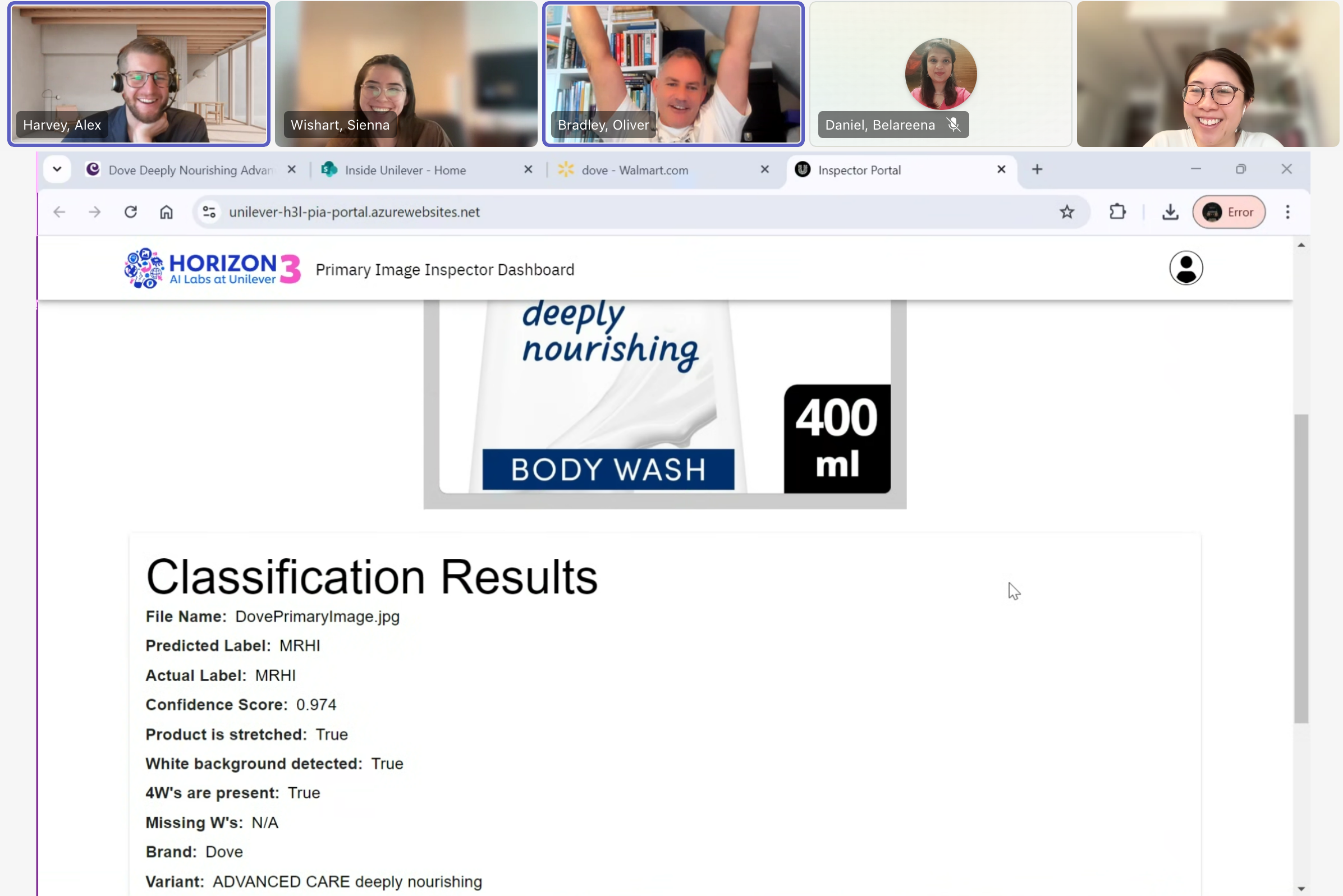
The data model and interface prototypes enabled marketers to automatically batch classify images and view the results with just a few clicks.
Client: Unilever
Timeline: 90 days
Pansy’s Role: Lead UX/Service Designer
Project Team: Project Manager, Data Science Lead, Lead U/ Service Designer, Development Lead, 2 Developers
Stakeholders: Director of Marketing Insights, Head of Unilever Horizon 3 Labs (Innovation division)
Project Details
Business Outcome:
706,000 potential manual classification hours saved
Business Impact
$30 million USD in potential savings
6.23%-17.04% of predicted revenue lift (~€0.61M – €6.1M per year) in 1-3 years with using primary images on e-commerce sites
“We involved the business users in the process through the service design model... to create a reusable solution and capability, and the results were phenomenal. ”
Problem & context
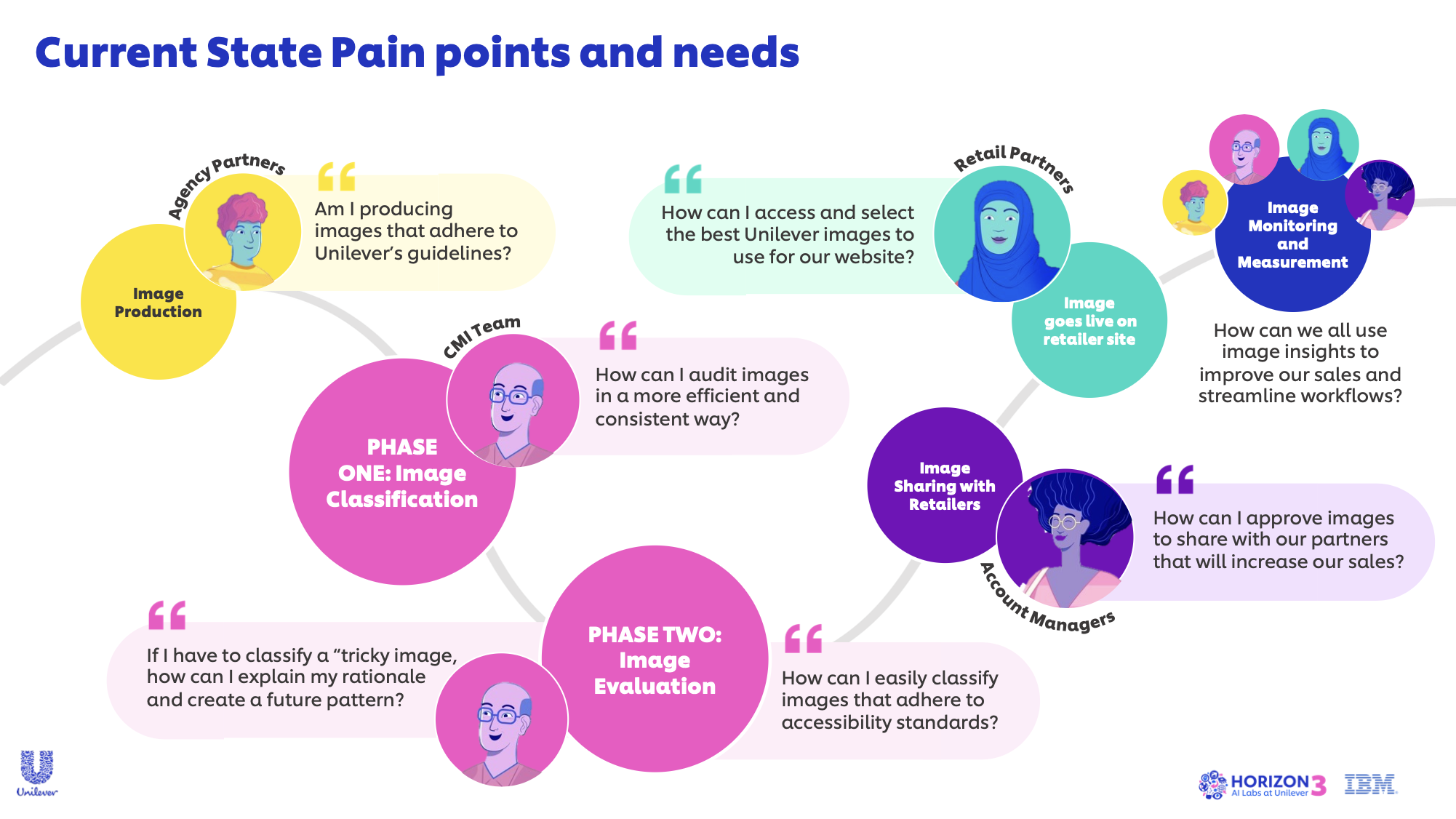
Digital Shelf Inconsistency: 60k images/year are created a "bottleneck of human error" that cost Unilever millions in lost conversion.
Primary image classification of these images was manually done in an spreadsheet by marketers across different internal teams and external retailers.
This resulted in significant manual employee efforts with no clear classification rules, resulting in weaker digital shelf performance of products with poor images.
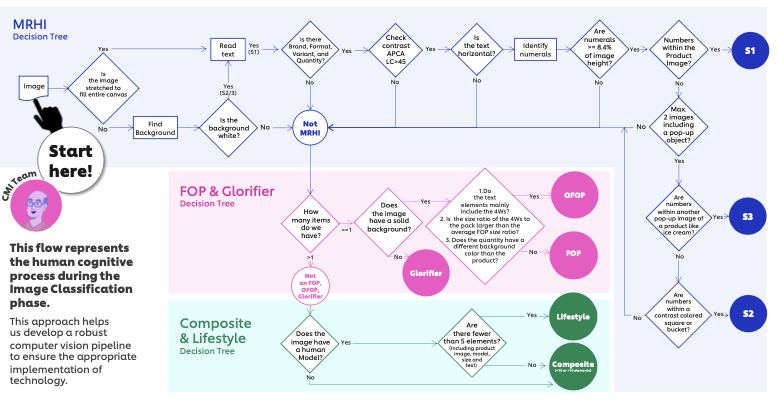
Our goal was to create an automated + human-in-the-loop workflow targeting 90% image classification accuracy to reduce manual classification efforts and time spent.
Pansy’s Role as the Lead Designer
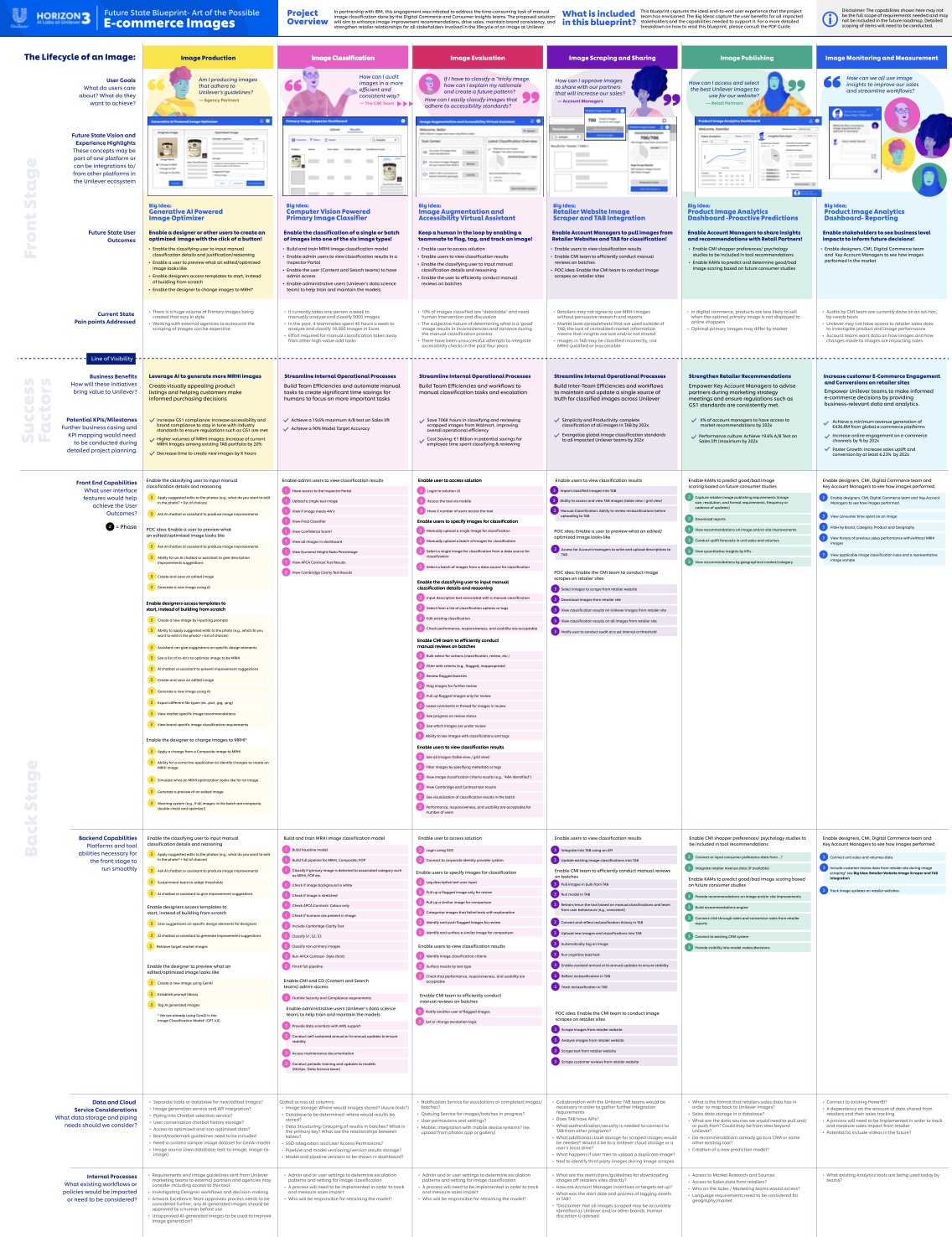
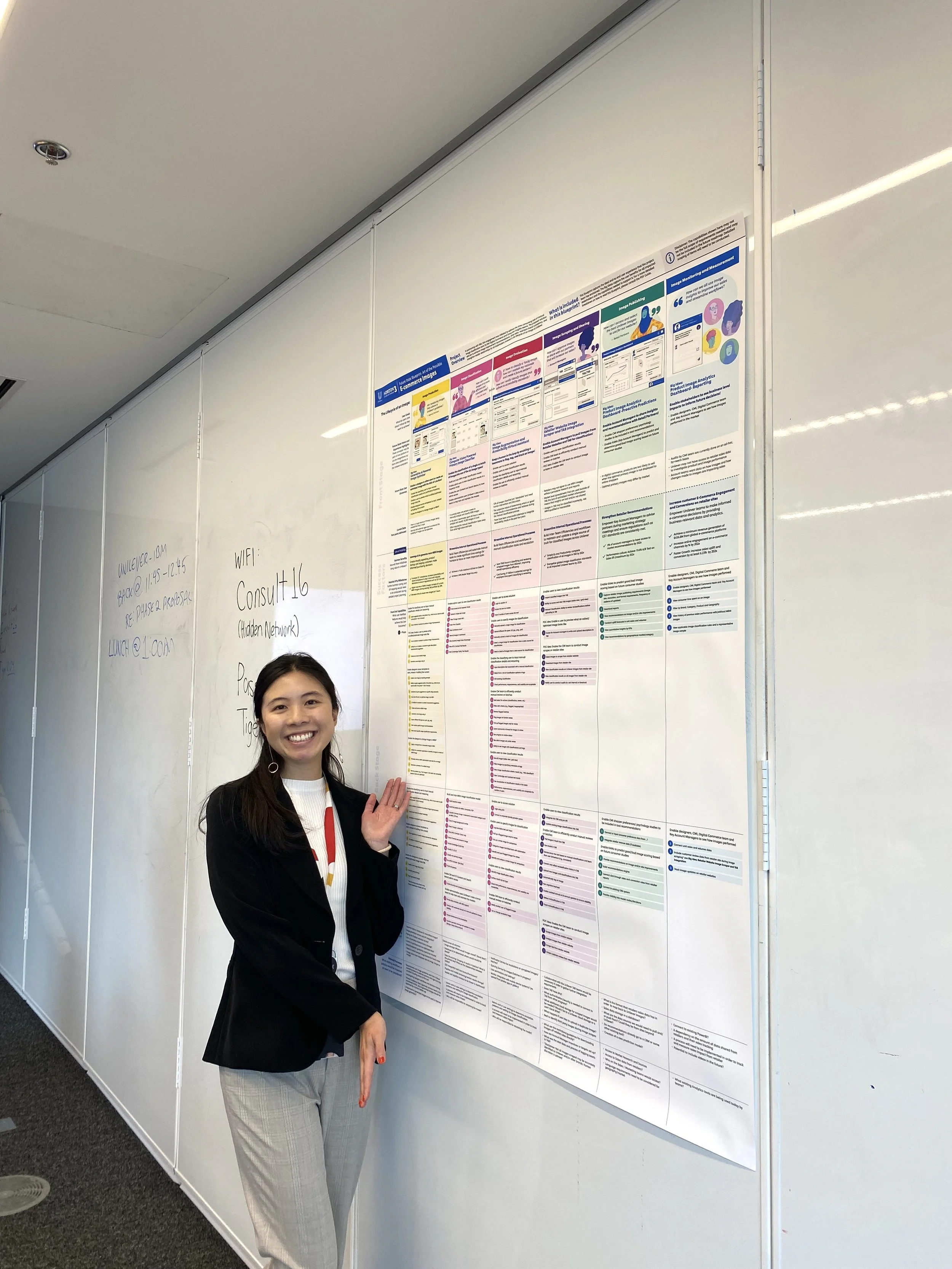
Service design orchestration: I mapped the end-to-end image lifecycle across teams and touch points, aligning people, process, and the technology into one singular service design blueprint that moved the project from a 'cool demo' to a scalable internal service. I identified 140+ experience gaps that would have caused the solution to fail in user-adoption in product launch.
Adoption + governance by design: I designed 6 conceptual wireframes mockups for trust with human-in-the-loop workflows like reviews, exceptions, and confidence checks so the solution could scale sustainably, not just demo well.
Led mixed-method research: I ran stakeholder interviews and current-state mapping, then paired the qualitative findings with quantitative ops benchmarks (classification volume + effort) to size the problem and ground decisions in evidence.
Pansy’s UX Leadership Approach
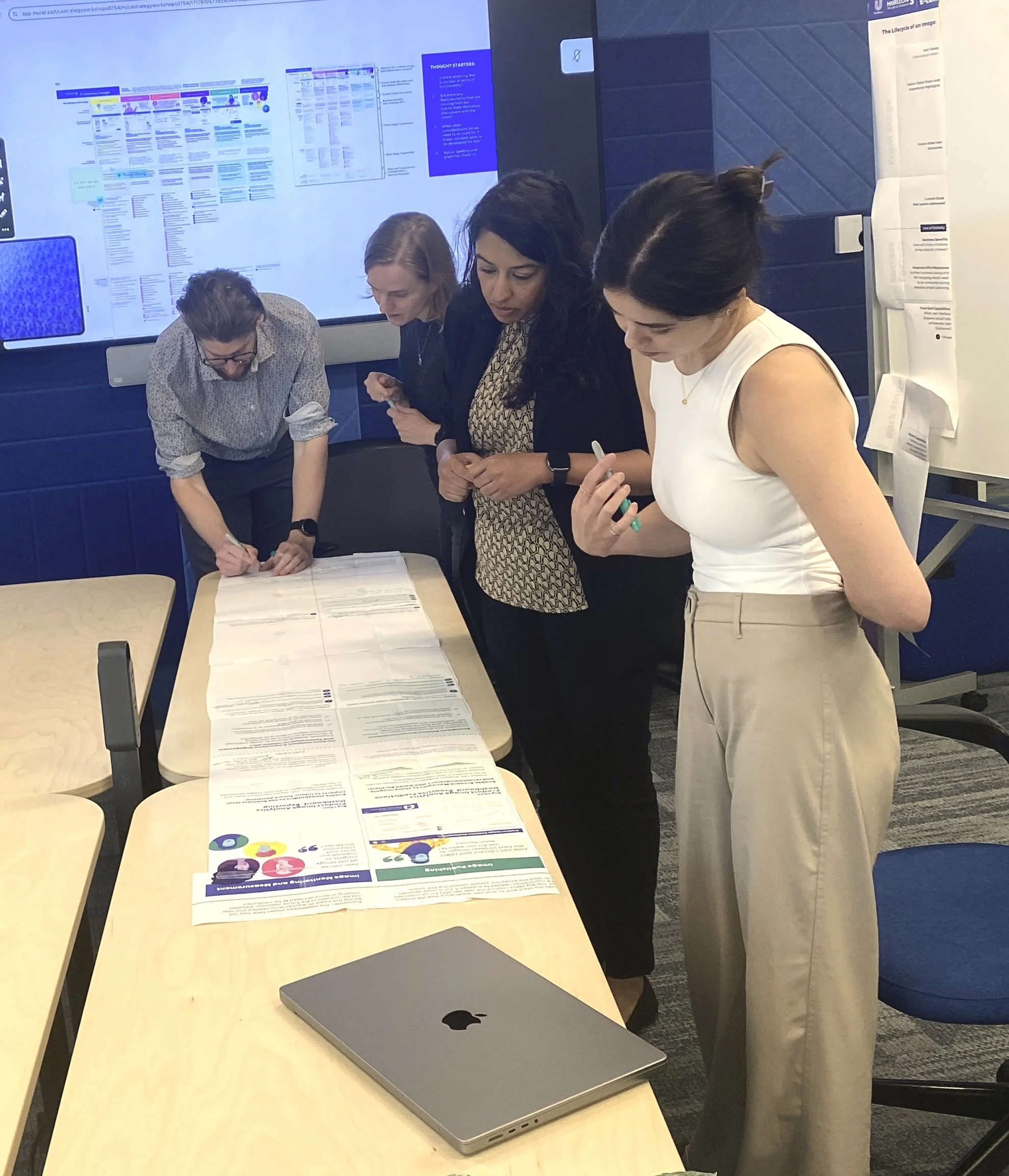
Led with service design: Orchestrated interviews and synthesis, then facilitated co-creation workshops to map the full image lifecycle and aligned the analytics, data science, and account leadership teams on one shared future state vision.
Made it relatable for everyone: Embedded technical realities (data inputs/outputs, confidence and human review loops, governance/ownership) into the blueprint so both technical and business teams could act on it.
Drove decisions through review cycles: Led interactive review cadences with the team to resolve gaps fast and convert the future-state blueprint into a prioritized roadmap for the tool, and to visualize future interface possibilities with the new proposed features.
“I was blown away with the accuracy of the working prototype; it’s a real game changer that will end internal arguments. I found it to be so accurate on the two accessibility tests. I was stunned!”
Methodology & Leadership Decisions
I led interviews and current-state mapping, then used information design and visual storytelling at checkpoints to make the results and business need obvious for both the project and client teams.
I partnered with data scientists to present a research-backed, executive-ready blueprint and business case.
I translated technical model performance results into a clear and sponsor-able trust story.
Designing for Human-in-the-loop: I designed the workflow for how the AI flags an image and surfaces it to a human analyst to review, correct, or approve an image classification that needed human eyes on it.
-
A key challenge was that the solution was onlu being designed for one slice of the primary image lifecycle. We could have ended up with a technically impressive POC that would not be adopted because it did not fit or scale to the potential of the broader operating model. Multiple teams touch product images at different points in their workflows, each with their own goals, definitions, and handoffs. Optimizing for just one step would likely shift bottlenecks downstream, create friction across groups, and miss opportunities where the same capability could unlock value in other parts of the business.
-
I broadened the scope from just building a model to understanding the end-to-end image lifecycle and how different business groups create, use, validate, and act on image data. I mapped stakeholders and workflows to identify where classification and quality signals could be reused across teams, and what experience, process, and governance considerations were required for the capability to scale. I embedded this research into the Service Design Blueprint to make the full ecosystem visible, including inputs, handoffs, decisions, and feedback loops. I then translated it into a product roadmap that sequenced near-term wins while intentionally designing for expansion beyond the initial workflow. This became the differentiator versus POCs that focus only on technical performance.
-
By grounding the work in the full lifecycle, the output became more than a working POC. It became a credible path to enterprise adoption with clearer ownership, clearer integration points, and multiple high-value use cases beyond the original narrow workflow. The blueprint and roadmap helped Unilever see how the capability could evolve into a scalable product that supports faster classification, more consistent standards, stronger QA, and more actionable insights for downstream activation. Most importantly, it reframed the conversation from whether AI could classify images to how this capability could improve decisions across the business and scale over time.
“It’s refreshing to work with a vendor that gets Product and can build a clear vision.”
The Outcome
140+ Futures State Roadmap items identified on the Service Design Blueprint aligned to four additional business groups
5 conceptual mockups of future state tool capabilities
92% accuracy of the classification model
Reflection: If I were to lead this today, I would leverage Vibe Coding to move from 'Conceptual Mockups' to 'Functional Prototypes' in the first 30 days. This would allow for 'Real-Data Testing' much earlier in the cycle, shortening the feedback loop between the Data Scientists and Unilever analysts, marketers and account managers.